
Introduction:
Carrier oils are important when it comes to skin care, beauty applications, and cooking. There are many carrier oils for skin that can be utilised for skin care, beauty applications, and even cooking.
The choice of carrier oil when formulating a skin care product goes beyond simply choosing a very common botanical oil. The properties of every carrier oil are unique in terms of fatty acid composition, viscosity, absorption, stability and formulation properties. These differences can impact skin feel, claims, packaging, product shelf life and cost to cosmetic manufacturers.
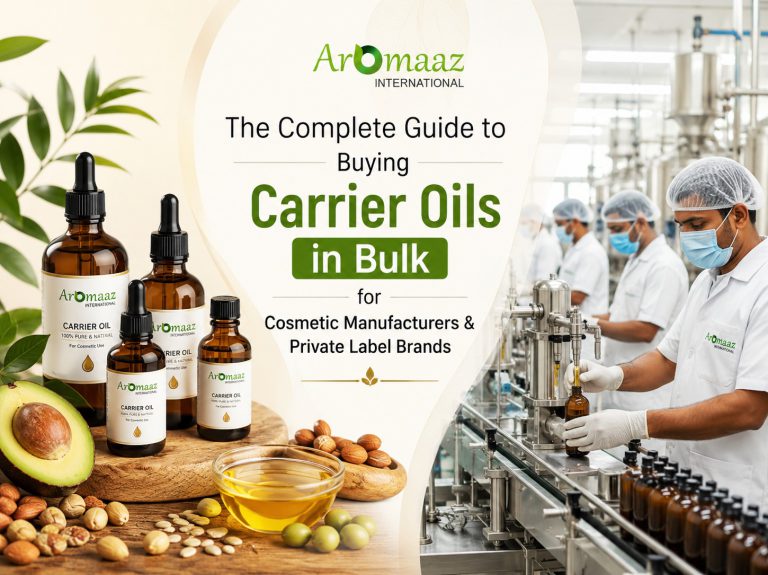
Knowing these differences will help Bulk carrier oils suppliers ease the sourcing process for brands creating facial oils, serums, creams, massage products or hair treatments. Commercial applications require a wide range of carrier oils, and Aromaaz International provides a large selection of them. Some common carrier oil examples include jojoba, argan, avocado, rosehip, coconut, olive, sea buckthorn and many speciality seed oils.
What Is Carrier Oil?
Carrier oil, also known as fixed vegetable oil, plays an essential role in manufacturing cosmetics such as skincare products, massage creams, aromatherapy blends, and other personal care products. Manufacturers also use carrier oils to dilute essential oils and safely apply them to the skin.
Fixed oils are non-volatile, as opposed to essential oils. Some common carrier oils are made from jojoba, coconut, argan, sweet almond, grapeseed, olive, avocado and rosehip.
But for manufacturers, “natural” is not necessarily “interchangeable”. The fatty-acid content determines an oil’s feel, spreadability, and oxidation stability. Cosmetic formulators commonly use argan, coconut, grapeseed, jojoba, olive, rosehip, and sweet almond oils in a wide range of cosmetic formulations.
List Of Carrier Oils And Their Benefits:
Here is a list of carrier oils and their benefits:
1. Jojoba Oil
Though not a typical triglyceride oil, jojoba is commonly used as a carrier.
It has a light, smooth texture and is suitable for use in facial oils, serums, hair and scalp products and massage oils. It is also useful for a less greasy finish, due to its composition and stability.
Good for:
- Facial serums
- Scalp products
- Massage oils
- Hair conditioners
- Essential-oil blends
Scientific reviews of plant cosmetic oils also mention the conditioning properties and use of jojoba oil in cosmetic applications.
2. Argan Oil
Argan oil is a popular ingredient in the cosmetic industry for skin and hair care products. It has high levels of unsaturated fatty acids and inherent tocopherols.
Common applications include:
- Facial oils
- Anti-aging formulations
- Hair serums
- Body oils
- Premium massage products
3. Rosehip Oil
Brands commonly include Rosehip oil in facial care products to create a high-end positioning with a natural ingredient.
Formulators can add it to facial oils, facial serums, creams, and targeted skincare products. Virgin and refined grades may be available; the buyer should request the type of grade desired.
If it is a commercial formula, please check:
- Extraction method
- Fatty-acid specification
- Colour and odour
- Oxidative stability
- Packaging
- Shelf life
4. Grapeseed Oil
Grapeseed is a good choice for a formulation that requires a relatively light, quick spreading oil.
Formulators commonly use it in facial oils, body care products, and massage blends. They can also use it to balance richer oils and create a more refined formulation.
This is a key point to note for formulators: the “best oil” is often the “best blend of oils. Formulators can combine two or more oils to achieve a more desirable skin feel, improve stability, and optimize formulation costs.
5. Sweet Almond Oil
Formulators commonly use sweet almond oil in massage oils and body care products. They choose it for its soft, emollient properties when they want a lightweight, comfortable application rather than a richer feel.
It is frequently used for:
- Body oils
- Massage oils
- Creams
- Lotions
- Haircare products
Allergen and market specific labelling considerations should be taken into account with nut-derived ingredients by manufacturers.
6. Coconut Oil
Coconut oil will help you with a different fatty-acid profile. It’s both richer and more likely to react differently from lighter oils like grapeseed or jojoba.
Formulators commonly use it in skincare, haircare, and body-care products when they need a more substantial emollient component in the formulation.
The study on a review of research about plant based cosmetic oils reveals coconut oil is unique in its fatty-acid profile and uses in cosmetics.
7. Avocado Oil
Avocado oil is appropriate for more rich skin-care and body-care products. It can be beneficial in some products intended for dry skin that require a thicker emollient content.
Avocado oil can be employed for B2B products, such as:
- Body butters
- Creams
- Facial oils
- Massage products
- Hair masks
Colour, smell and texture are important – refined oils don’t always look, smell or feel the same as virgin oils.
8. Olive Oil
Is olive oil a carrier oil? Yes, formulators can use olive oil as a carrier oil and an emollient in cosmetic formulations.
It is better suited to heavier formulas rather than those that are meant to provide a light feeling to the skin. The smell of refined olive oil will vary from virgin olive oil.
Aromaaz Oils provides refined and extra-virgin olive oils as a part of the line of carrier oils. Specifications for the product are provided.
9. Sunflower Oil
Manufacturers may want to use sunflower oil as a widely available, botanical-based oil. It is a relatively light oil, useful in creams, lotions, body oils and cleansing products.
It is also available to be combined with other oils to modify product texture and fatty acid content.
Buyers should verify if they need high oleic, conventional or another specified specification for buying carrier oils in bulk.
10. Sea Buckthorn Seed Oil
Sea buckthorn seed oil isn’t a standard bulk oil but rather a special ingredient. It is commonly found in high-quality skin care formulations where botanical location is significant, and a unique nutrient profile is desired.
Often, speciality oils are used at a reduced percentage by formulators, due to their more costly nature, in order to supplement more cost effective carrier oils.
This can be useful to develop a premium product without adding too much to the raw-material cost.
How To Use Carrier Oil For Skin in Commercial Products
How to use carrier oil for skin depends on the finished formulation. The carrier oil for skin can either be the main oil phase of a facial oil, a component of an emulsion, or the base of an aromatherapy blend.
Some considerations for the manufacturer are:
- What skin feel is desired?
- What percentage oil is wanted?
- What additional oils or active ingredients will be used?
- What stability does the formula have?
- What packaging protects the product?
- What claims are legally allowed?
Carrier Oil for Skin Tightening and Skin Whitening
There are many queries about carrier oil for skin tightening and carrier oil for skin whitening; however, companies have to proceed with care here.
A carrier oil could make the skin softer and enhance its texture. However, the oil cannot provide skin tightening or any kind of skin whitening by itself.
For anti-dyschromia products, companies need to develop claims based on the whole formula and not on just the carrier oil that supposedly produces a cosmetic effect on the skin. Recent dermatology opinion also warns about making exaggerated claims about oils and skin.
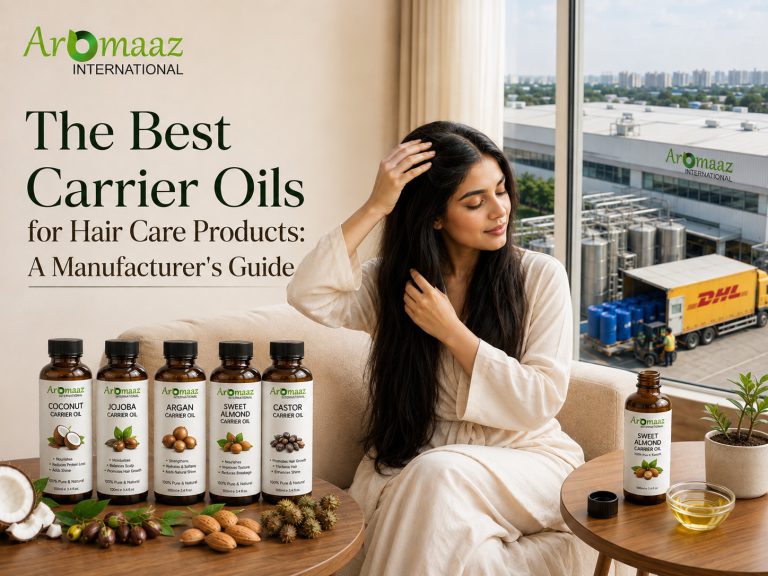
Carrier Oil for Hair Care: Which One to Choose?
Carrier oil for haircare has to be chosen according to the final product.
Lighter oils may be appropriate in leave-in serums, while richer oils might be preferable in pre-shampoo treatment, mask or scalp oil.
When choosing an oil for commercial hair care products, one should take into account:
- Spreadability
- Residue
- Compatibility with scalp
- Hair fibre feel
- Oxidative stability
- Fragrance compatibility
- Packaging
Jojoba, argan, coconut, sweet almond and selected speciality oils are all viable.
Conclusion:
The selection of an appropriate carrier oil is dependent on the intended use. While jojoba oil is ideal in a light facial serum formulation, coconut oil could be appropriate in the case of heavier hair care formulas, while argan oil could be perfect for premium skin and hair care formulations, and speciality oils like sea buckthorn oil could be useful in creating unique positioning for specific products. There is no one-size-fits-all carrier oil.
The best way to go about it for B2B buyers is to ensure that the fatty acid profile of the oil and its sensory characteristics, stability and processing technique suit the final formulation. Aromaaz International offers a wide variety of carrier oils for cosmetic, aromatherapy and personal care use, with product information and bulk inquiries available for commercial buyers.
For bulk orders and inquiries, please contact us at the details below:
Phone: +91 9643342464
Email: sales@aromaazinternational.com
FAQs
What are carrier oils?
Manufacturers widely use carrier oils, derived from vegetables and other natural sources, in cosmetics, massage products, and aromatherapy formulations. They use these oils to dilute essential oils for safe topical application.
Which carrier oils are suitable for dry skin?
Formulators can use jojoba, coconut, argan, and sweet almond oils in hair care products based on the specific hair care needs and product requirements.
What factors should manufacturers consider when choosing carrier oils in bulk?
One can think about such factors as the type of plants, the process of extraction, grades, COA, shelf life, packaging, and MOQ, among many others.
Do carrier oils help tighten and whiten the skin?
Carrier oils can nourish the skin, but manufacturers should not promote them as products that permanently tighten or whiten the skin.
Author Bio:

Gaurav Gupta is the author of this post. He is the Director of Aromaaz International, an entrepreneur, writer, and essential oils expert with over 15 years of experience in essential oils manufacturing, and supplying around the globe. Passionate about natural wellness, he shares practical insights on essential oils, aromatherapy, and botanical ingredients, helping readers and businesses make informed, quality-focused decisions.